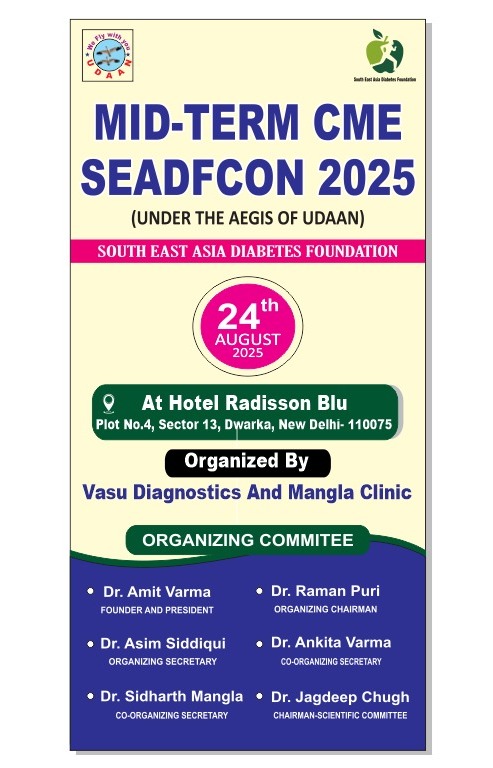
Southeast Asian Federation of Diabetes (SEDF), Malwa Chapter,
focusing on the evaluation of young-onset diabetes, secondary causes of
uncontrolled blood glucose, and the clinical assessment and management
of hypoglycemia.
Case Presentation: Young-Onset Diabetes
Clinical Case
A 29-year-old male was presented with poorly controlled diabetes despite
reported compliance with medical treatment. He had been diagnosed at age
28 with a random blood glucose level of 555 mg/dL and an HbA1c of 17%.
Clinical examination revealed acromegaloid features, including frontal
and zygomatic prominence, an enlarged nose, and enlargement of the hands
and feet. Further biochemical investigations showed elevated IGF-1 and
growth hormone levels, while MRI demonstrated a pituitary mass.
The final diagnosis was acromegaly associated with a pituitary
neuroendocrine tumour, identified as the secondary cause
contributing to the patient’s uncontrolled diabetes. Transnasal surgical
resection of the tumour was planned.
Key Clinical Lessons
- Look beyond common diabetes classifications:
Severe hyperglycemia or poor control despite treatment should prompt
consideration of secondary causes when clinical features suggest an
underlying endocrine disorder. - Recognise acromegalic features:
Enlargement of the hands and feet and characteristic facial changes
can provide important diagnostic clues. - Investigate appropriately:
Growth hormone and IGF-1 testing, followed by pituitary imaging when
indicated, can help establish the diagnosis. - Address the underlying cause:
Treating the hormonal disorder is an important component of overall
management, alongside appropriate diabetes care.
Panel Discussion: Evaluating Hypoglycemia
Whipple’s Triad
The panel emphasised the importance of confirming hypoglycemia using
Whipple’s triad, which consists of:
- Symptoms consistent with hypoglycemia.
- Documented low plasma glucose during the symptoms.
- Relief of symptoms after glucose levels are raised.
Establishing these three elements helps distinguish true hypoglycemia
from symptoms that may have other causes.
Critical Sampling and Diagnostic Evaluation
When clinically appropriate, blood samples obtained during a documented
hypoglycemic episode can help establish the underlying cause. Tests
discussed included:
- Insulin.
- C-peptide.
- Proinsulin.
- Beta-hydroxybutyrate.
Interpreting these results alongside the glucose level, medications and
clinical circumstances can help differentiate insulin-mediated
hypoglycemia from other causes.
Why the Timing of Hypoglycemia Matters
- Fasting hypoglycemia:
May raise suspicion for insulin-mediated causes, including insulinoma,
and requires a structured diagnostic evaluation. - Postprandial hypoglycemia:
Occurs after meals and may be associated with conditions such as
post-bariatric hypoglycemia or dumping syndrome.
Post-Bariatric Hypoglycemia
The panel discussed post-bariatric hypoglycemia, in which altered nutrient
delivery and hormonal responses, including GLP-1 signalling, may contribute
to post-meal glucose fluctuations.
Management Considerations
- Dietary modification with small, frequent meals where appropriate.
- Emphasis on protein-rich meals and careful selection of carbohydrate
sources. - Consideration of alpha-glucosidase inhibitors in selected patients
under medical supervision.
Hypoglycemia in Older Adults and Patients with CKD
Older adults and people with chronic kidney disease (CKD) may have an
increased risk of hypoglycemia, particularly when receiving glucose-lowering
medications.
The panel highlighted the importance of reviewing treatment intensity and
individualising glycemic targets according to overall health, comorbidities,
life expectancy and hypoglycemia risk. Less stringent HbA1c targets, such
as 7.5%–8% in selected patients, may be appropriate depending on the
individual’s circumstances.
Insulin Safety and Hypoglycemia Prevention
- The Rule of 15:
For a conscious person who can swallow safely, take 15 g of fast-acting
carbohydrate and recheck glucose after 15 minutes. Repeat if glucose
remains low. - Glucagon preparedness:
Ready-to-use glucagon may be appropriate for people at risk of severe
hypoglycemia. Family members and caregivers should know when and how
to administer it. - Hypoglycemia awareness:
Regularly assess whether patients recognise warning symptoms and provide
education on prevention, recognition and treatment. - Medication review:
Review insulin and other glucose-lowering therapies when recurrent
hypoglycemia occurs.
Localising Insulinoma
When initial CT or MRI imaging does not identify a suspected insulinoma,
further evaluation may be considered in specialist centres.
- Endoscopic ultrasonography.
- GLP-1 receptor-based imaging where available and appropriate.
- Selective invasive procedures, such as intra-arterial calcium stimulation,
in carefully selected cases.
The choice of investigation depends on the biochemical evidence,
clinical presentation, availability of specialist facilities and
prior imaging results.
The session reinforced the importance of identifying secondary causes
of diabetes when clinical findings are atypical and of approaching
hypoglycemia through careful confirmation, appropriately timed biochemical
testing, medication review and individualised management.
Academic Focus
The SEDF Malwa Chapter webinar provided an opportunity to discuss
challenging endocrine presentations and practical approaches to
hypoglycemia. The session highlighted the value of clinical reasoning,
targeted investigations and personalised diabetes care.
“`