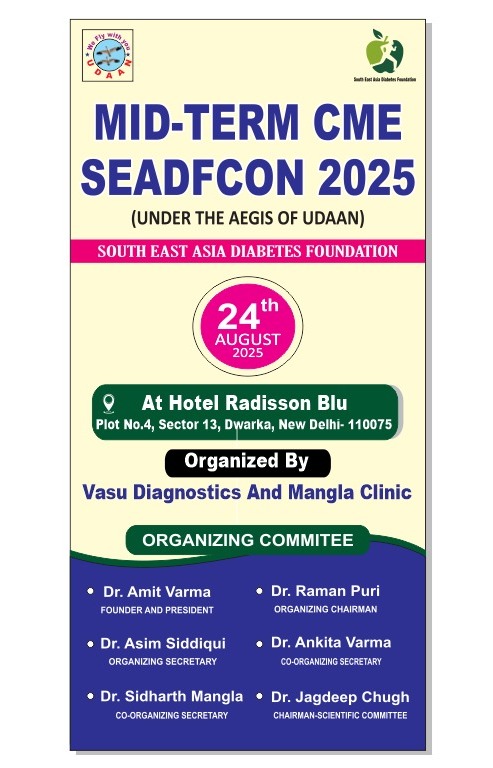
Webinar Summary: SEADF Deccan Chapter
An academic webinar hosted by the Deccan chapter of the Southeast Asian Diabetes Foundation (SEADF), focusing on clinical challenges in young-onset diabetes and the role of modern diabetes technology.
Case Presentation and Discussion
Clinical Case
A 16-year-old male with a two-year history of diabetes and hypothyroidism presented with uncontrolled blood glucose levels. Despite a normal BMI (21.24 kg/m²), the patient exhibited significant clinical signs of insulin resistance, including acanthosis nigricans and fatty liver.
Key Discussions
- Insulin Resistance: Experts identified insulin resistance as the primary driver of the patient’s condition, regardless of the normal BMI, emphasizing that ethnicity-sensitive interpretation and central adiposity (waist-to-height ratio) are more informative than BMI alone.
- Management Strategies: Panelists highlighted that lifestyle modification, including tailored exercise, remains a cornerstone of treatment. They also discussed the emerging role of GLP-1 receptor agonists for weight management and cardiovascular protection.
- Psychosocial Factors: The importance of integrating psychological screening for diabetes distress into routine care from the first visit was stressed, noting that poor adherence is often a symptom of underlying stress rather than simple negligence.
Diabetes Technology
Continuous Glucose Monitoring (CGM)
The second session explored the evolution of diabetes technology. Experts noted that while CGM provides critical insights into glucose variability and nocturnal hypoglycemia, it must be used alongside structured self-monitoring of blood glucose (SMBG).
Clinical Impact
CGM was identified as an empowering tool that helps patients visualize the impact of food and activity on their glucose levels, thereby facilitating behavioral change.
Institutional Efforts
The Research Society for the Study of Diabetes in India (RSSDI) is actively working to bridge the gap in digital health literacy and data management through initiatives like the Center for Digital Diabetes (KCDD), research grants, and mobile applications like “Mitra”.