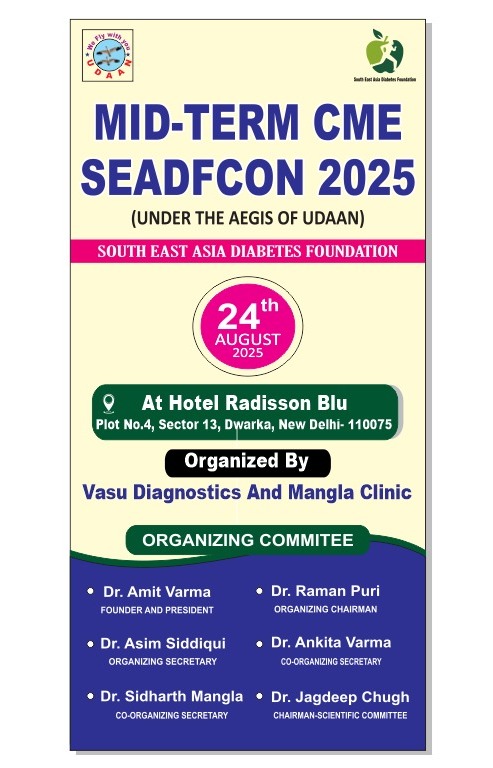
Seminar Summary: SEADF Punjab Chapter
An academic seminar hosted by the Punjab chapter of the Southeast Asian Diabetes Foundation (SEADF), featuring a case presentation followed by a panel discussion on beta cell therapies.
Case Presentation: Prader-Willi Syndrome
Case Overview
The seminar began with a case study of a 16-year-old male with a two-year history of diabetes mellitus. The patient presented with osmotic symptoms, weight gain, hyperphagia (constant food-seeking behavior), and a lack of satiety.
Clinical Findings
Physical examination revealed a BMI of 36.5 kg/m², almond-shaped eyes, a thin upper lip with downturned corners, enamel hypoplasia, acral features (short hands), and prepubertal status.
Diagnosis & Management
Based on these clinical features and feeding difficulties in early infancy, the patient was diagnosed with Prader-Willi Syndrome, confirmed via genetic testing showing a loss of paternal allele at the 15q11-q13 locus. Treatment included metformin, the GLP-1 receptor agonist liraglutide, and testosterone replacement.
Learning Points
The presenters emphasized that clinicians should suspect syndromic diabetes if they observe early-onset diabetes (less than 6 months), absence of autoantibodies, extra-pancreatic signs, or specific dysmorphic features. Early diagnosis is critical to potentially improving metabolic outcomes, particularly through interventions like growth hormone therapy.
Panel Discussion: Beta Cell Replacement and Regeneration
The Need for Alternatives
Experts discussed the limitations of current diabetes technology (pumps and sensors) and exogenous insulin. They argued that endogenous insulin secretion remains the “gold standard” because it provides real-time, physiological portal delivery and metabolic regulation that artificial systems cannot fully replicate.
Replacement Strategies
- Whole pancreas transplantation is an established but limited procedure, typically reserved for type 1 diabetes patients undergoing simultaneous kidney transplants.
- Islet cell transplantation, such as the FDA-approved Lantidra, offers a less invasive alternative but requires lifelong immunosuppression and faces challenges regarding donor availability, cost, and graft rejection.
Regenerative Future
The panel explored stem cell-derived beta cell therapies (e.g., Vertex’s VX-880) as a potential “game changer” that could provide an unlimited supply of beta cells. While pharmacological regeneration (using compounds like harmine) is being researched, experts stressed that regeneration must be coupled with immune tolerance strategies to prevent the autoimmune system from destroying the new cells.
Future Requirements for India
To participate in global advancements, India needs to develop national type 1 diabetes registries, biobanks, ethical trial networks, and stronger partnerships between endocrinology, immunology, and stem cell research centers.